Everest Base Camp
Through the Gokyo lakes and the Cho La pass
12 April-1 May 2027 · 20 days, with Kala Patthar and base camp
- Dates
- 12 Apr-1 May 2027
- Length
- 20 days
- Highest point
- 5,645 m
- Price
- €2,400 / person
7 more participants until the group discount
Departure is guaranteed from 6 participants. The group discount applies from 10 participants with the deposit paid.
Places updated on 27 October 2026
162 days to go until departure
Departure means day 1 of the programme, 12 April 2027. The group flight from Romania leaves the day before, on 11 April 2027.
Deadlines- Depositat booking
- Balance1 February 2027in 93 days
- Group discount check11 February 2027in 103 days
Right now there
Local time
The weather right now, not a forecast for the tour dates. Data from MET Norway, updated about once an hour.
To base camp, the long way round
In the Khumbu valley there are several trails and villages you can take to Everest Base Camp. This programme links two of the most beautiful routes in the Himalayas: it climbs through the Gokyo valley, with its glacial lakes, crosses the Cho La pass and comes down into the Khumbu valley, at the foot of the highest mountain in the world.
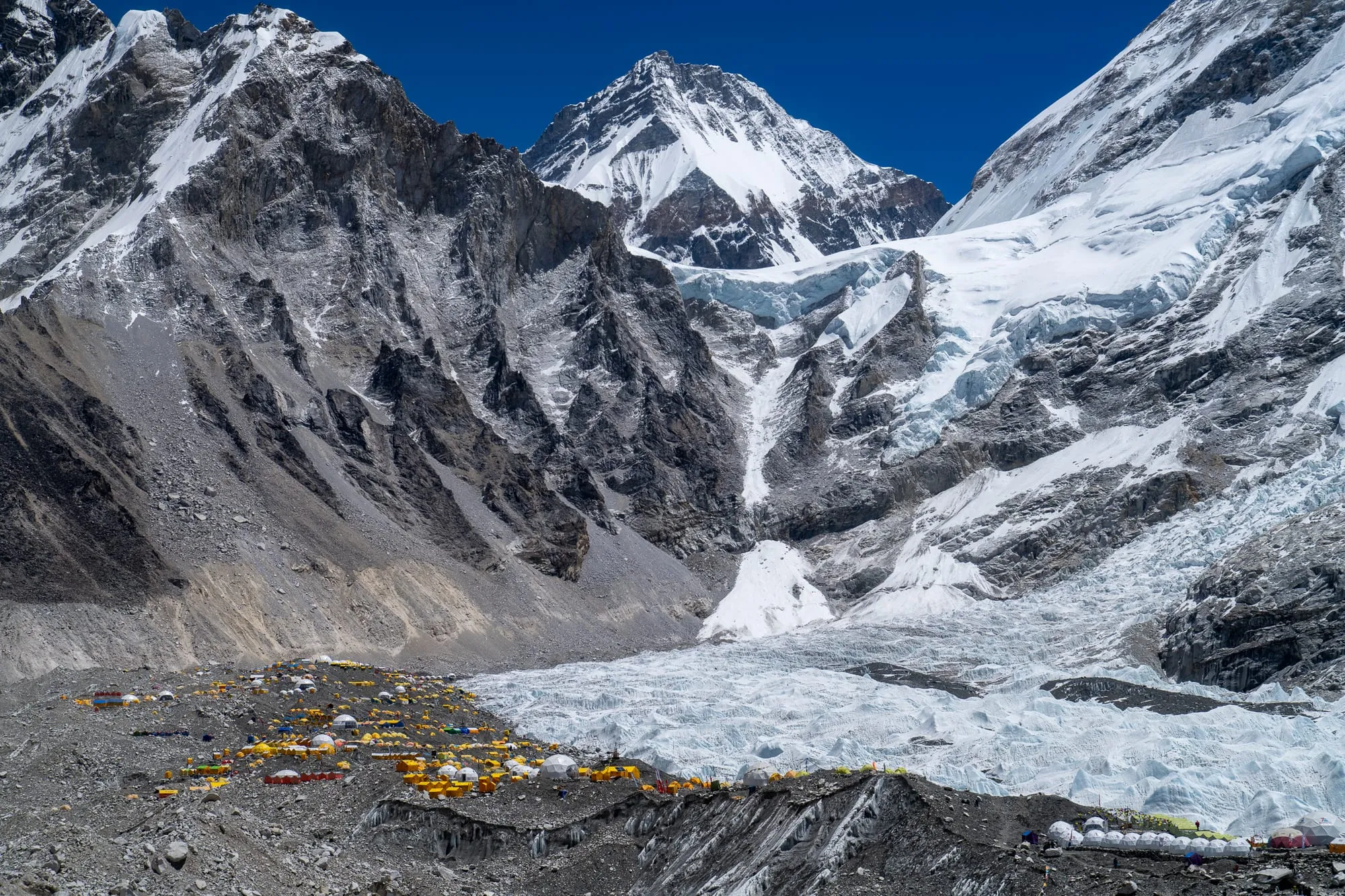
From Gokyo Ri and Kala Patthar you see Everest, Lhotse, Cho Oyu and Makalu, and at base camp you walk up to the rock that marks its entrance. It is a hard trek, physically and mentally, but also a good chance to get to know the mountain and the people who live there up close.
After base camp you can carry on and climb Island Peak: three extra days, with the camp below the peak, a climbing lesson and the climb on fixed ropes. Everest Base Camp + Island Peak takes 23 days and costs €3,100; up to Everest Base Camp we are the same group.
- Dates
- 12 April-1 May 2027 (20 days, 19 nights), with the flight from Romania on 11 April
- On the trek
- 15 days, 2 of them for acclimatisation, at Namche and at Machhermo
- Route
- Lukla, Namche, the Gokyo lakes, the Cho La pass, Kala Patthar, base camp
- Highest point
- Kala Patthar, 5,645 m
- Distance
- around 130 km on the daily stages, plus the acclimatisation walks
- Accommodation
- 3-star hotel in Kathmandu (4 nights) and teahouses for the whole trek (15 nights)
- Arrival and departure
- Tribhuvan International Airport, Kathmandu (KTM): arrival on 12 April, departure on 1 May
Twenty days, day by day
Altitude profile
sleeping altitudehighest point of the dayacclimatisation day2,500 m, where altitude sickness becomes a risk| Day | The day | Sleep at | Highest | Distance and height gain |
|---|---|---|---|---|
| 12 Apr | Welcome to Kathmandu | 1,400 m | 1,400 m | - |
| 13 Apr | Getting ready for the expedition | 1,400 m | 1,400 m | - |
| 14 Apr | The flight to Lukla | 2,600 m | Lukla, 2,860 m | 8 km, +250 m / −430 m |
| 15 Apr | The climb to Namche Bazaar | 3,440 m | 3,440 m | 10.5 km, +1,150 m / −400 m |
| 16 Apr | First acclimatisation day (acclimatisation day) | 3,440 m | Everest viewpoint, 3,880 m | - |
| 17 Apr | On the road less travelled | 4,050 m | 4,050 m | 12 km, +1,250 m / −630 m |
| 18 Apr | A short day at altitude | 4,400 m | 4,400 m | 5 km, +430 m / −100 m |
| 19 Apr | Second acclimatisation day (acclimatisation day) | 4,400 m | 4,400 m | - |
| 20 Apr | Past the glacial lakes | 4,760 m | 4,760 m | 7 km, +400 m / −60 m |
| 21 Apr | Four eight-thousanders from one spot | 4,700 m | Gokyo Ri, 5,357 m | 6 km, +330 m / −400 m |
| 22 Apr | Crossing the Cho La pass, 5,420 m | 4,820 m | Cho La pass, 5,420 m | 9 km, +790 m / −630 m |
| 23 Apr | Back on the classic route | 4,940 m | 4,940 m | 7 km, +260 m / −170 m |
| 24 Apr | Gorak Shep, the last village | 5,170 m | 5,170 m | 5 km, +290 m / −60 m |
| 25 Apr | Kala Patthar and base camp | 5,170 m | Kala Patthar, 5,645 m | 10.5 km, +750 m / −750 m |
| 26 Apr | The first day back | 4,250 m | Gorak Shep, 5,170 m | 13 km, +100 m / −1,020 m |
| 27 Apr | “Nepali flat” | 3,440 m | Pheriche, 4,250 m | 21 km, +860 m / −1,700 m |
| 28 Apr | The last day on the trail | 2,860 m | Namche Bazaar, 3,440 m | 18 km, +850 m / −1,450 m |
| 29 Apr | The flight back | 1,400 m | Lukla, 2,860 m | - |
| 30 Apr | An extra day in Kathmandu | 1,400 m | 1,400 m | - |
| 1 May | Heading home | - | - | - |
Route map
Approximate, with the main places.Day by day
Press + to open a day, or pick it on the chart or the map.
Pick a day from the cards, the chart or the map to see its details.
12AprMondayDay 1 of 20Monday · ArrivalWelcome to KathmanduTribhuvan International Airport (KTM) → hotel in Kathmandu
The flight from Romania leaves on 11 April, and on 12 April we land in Kathmandu.
Transfer from the airport to the hotel and a first taste of a colourful, noisy city. Free time is well spent getting lost in the lanes of Thamel, the neighbourhood in the centre of town, trying the local food and looking at the handmade things in the shops. In the evening we meet for the traditional welcome dinner.
- Distance
- none
- Ascent
- none
- Descent
- none
- Time
- none
- Stay
- 3-star hotel in Kathmandu
- Meals
- welcome dinner
13AprTuesdayDay 2 of 20Tuesday · KathmanduGetting ready for the expeditionKathmandu
We pack the two bags: the daypack you carry yourself and, separately, the duffel the porter carries. We keep to the limit of the Lukla flight, 15 kg per person including hand luggage. The rest of the day is free, for Thamel and for last-minute gear shopping.
- Distance
- none
- Ascent
- none
- Descent
- none
- Time
- none
- Stay
- 3-star hotel in Kathmandu
- Meals
- breakfast
14AprWednesdayDay 3 of 20Wednesday · Flight and first day of the trekThe flight to LuklaKathmandu → Ramechhap → Lukla, 2,860 m → Phakding, 2,600 m
The day starts before dawn. We drive about 4-5 hours to the airport at Ramechhap (Manthali), where the Lukla flights leave from in the spring season. The flight takes around 20 minutes and passes a good part of the Himalayan range. The runway at Lukla is very short and sloping, on the lip of a hill surrounded by high mountains, and the flights depend a lot on the weather.
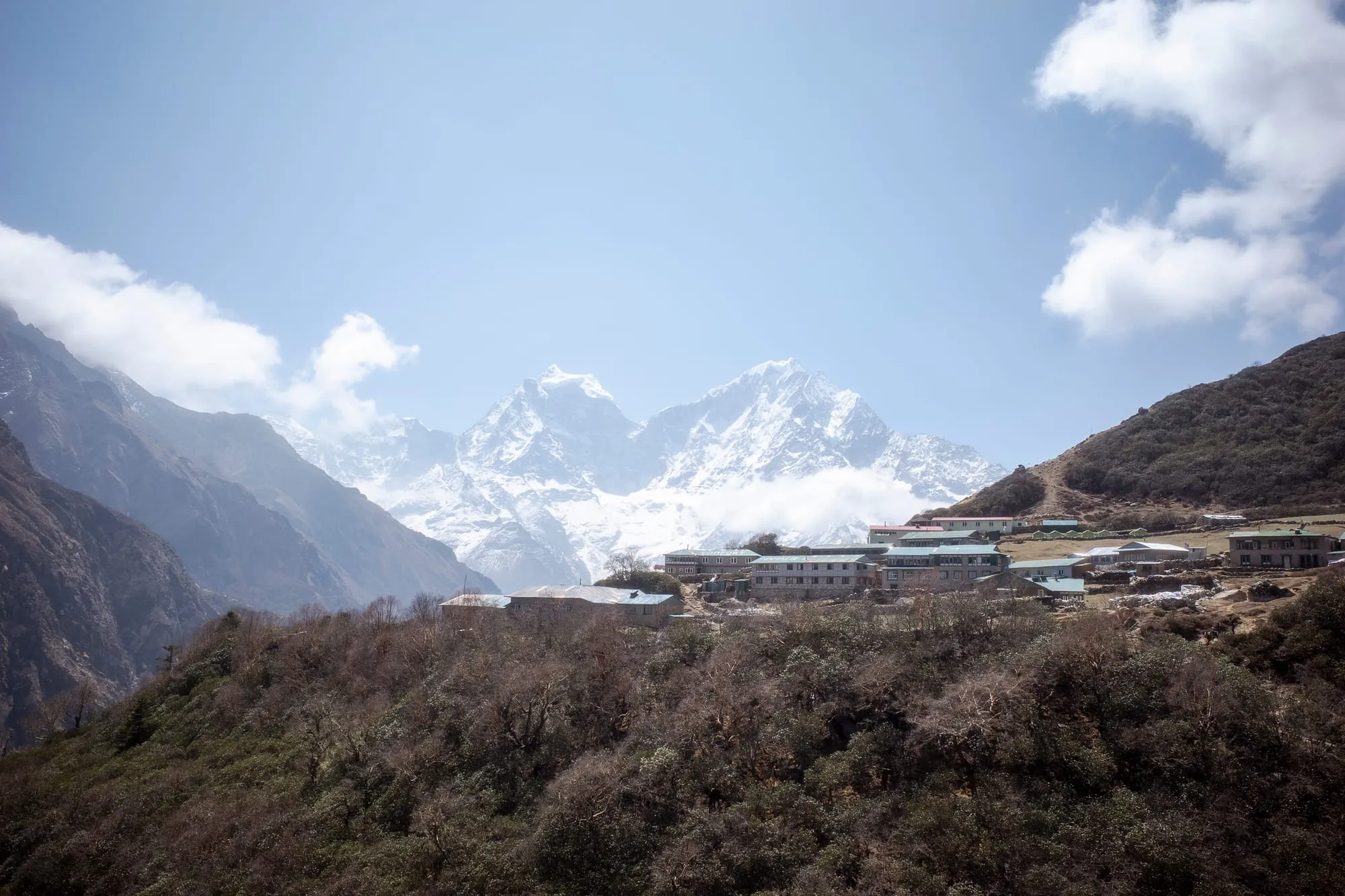
Once the bags are sorted and the permits collected, we set off through the first mountain villages. We spend the first night in a teahouse, a Nepali guesthouse. The facilities are simple but enough.
- Distance
- 8 km
- Ascent
- +250 m
- Descent
- −430 m
- Time
- 3-4 hours
- Stay
- teahouse in Phakding
- Meals
- full board
15AprThursdayDay 4 of 20Thursday · Dudh Koshi valleyThe climb to Namche BazaarPhakding → Namche Bazaar, 3,440 m
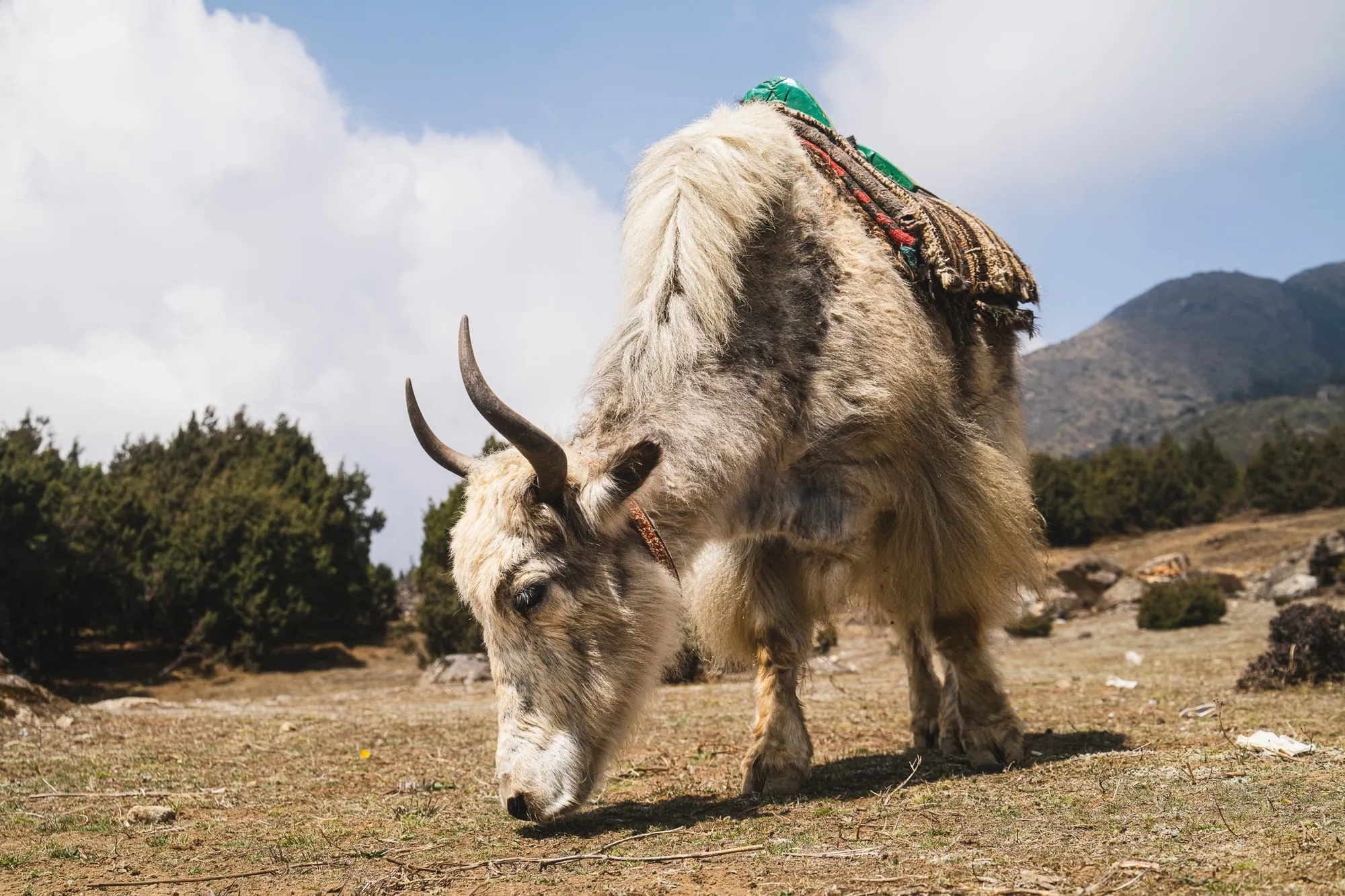
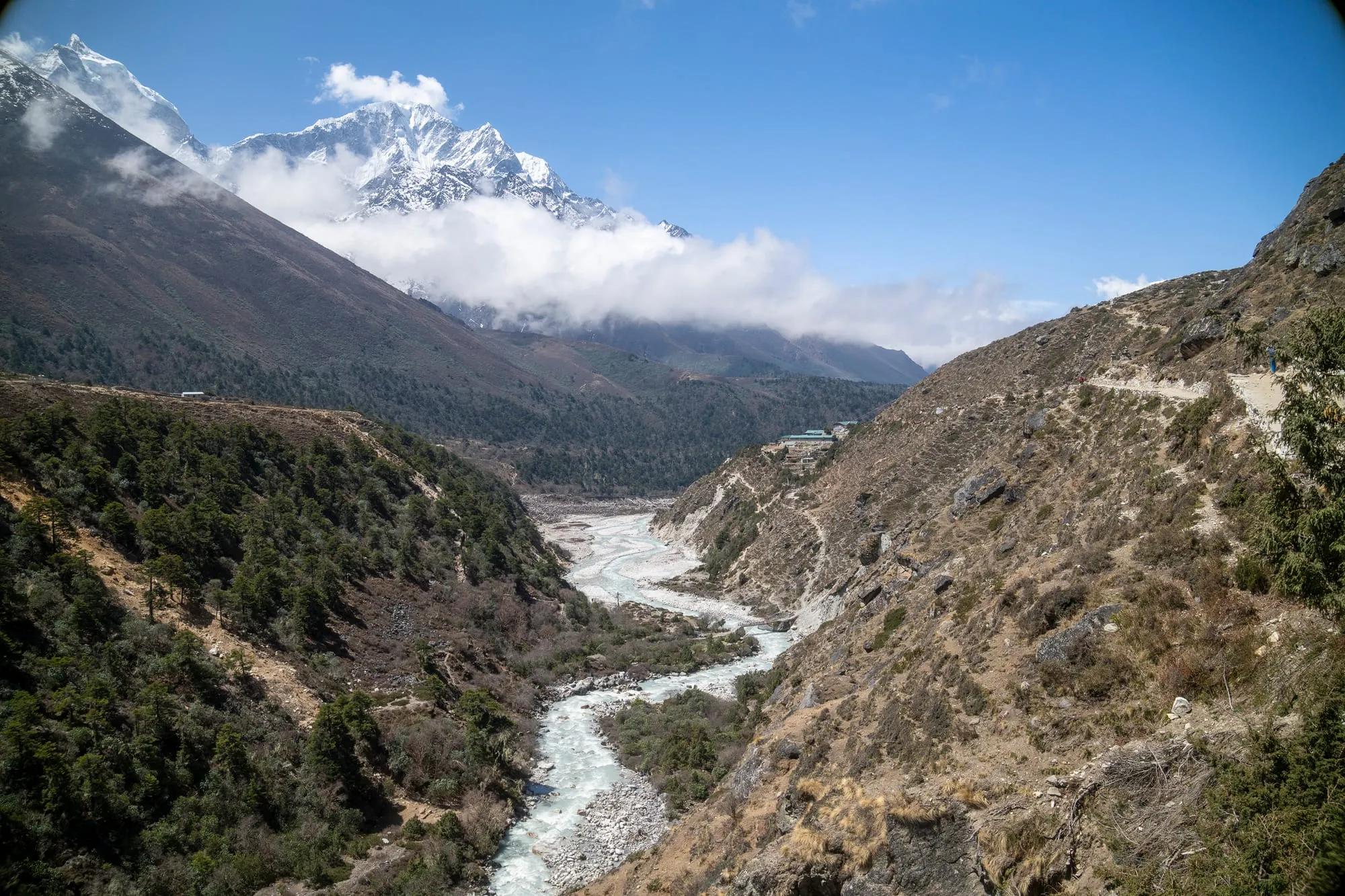
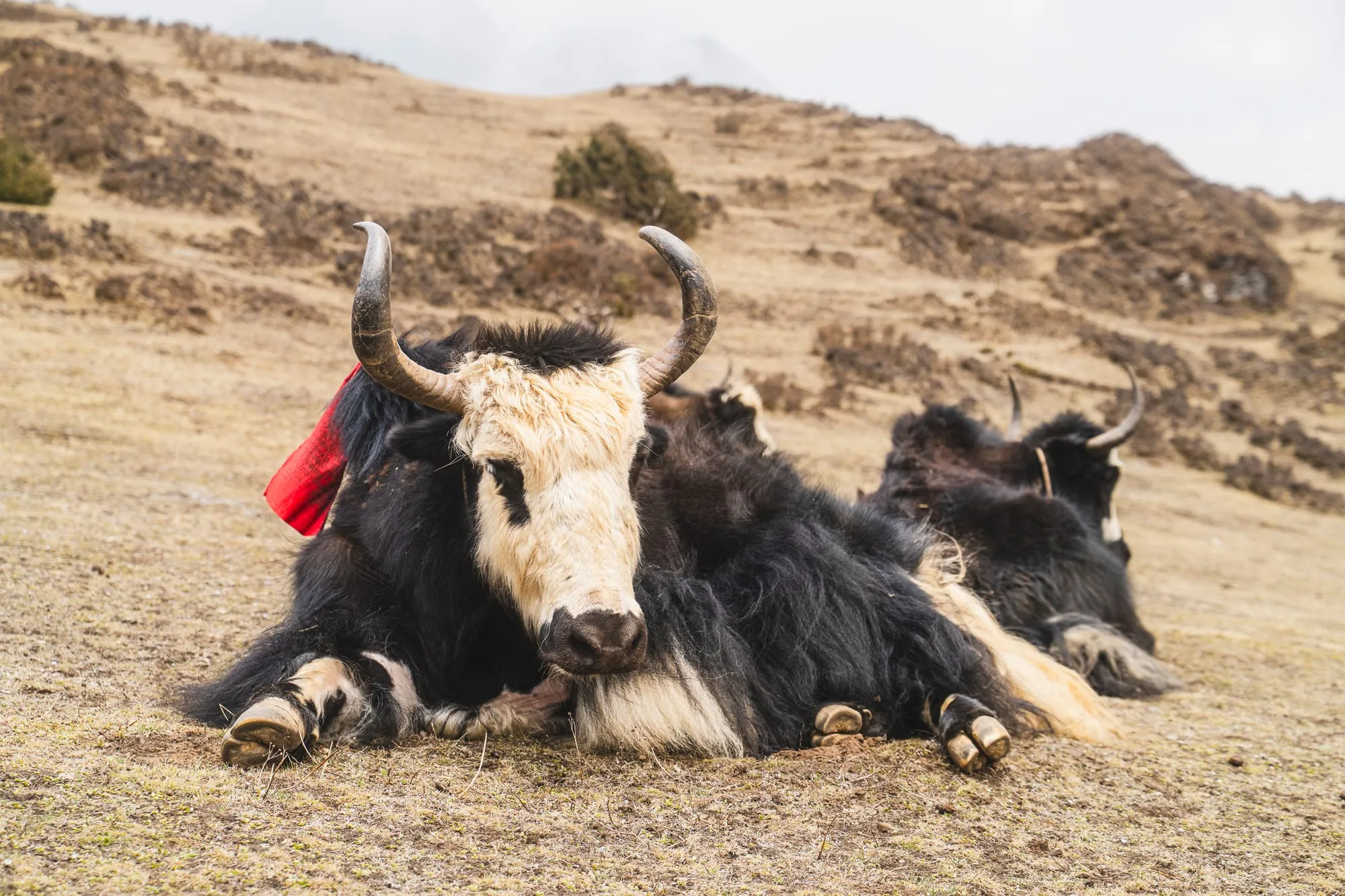
We walk along the river and cross it several times on iron suspension bridges. We often stop to let a caravan of yaks or donkeys go by, carrying goods between the villages. Before Namche comes a long, steep climb of about 600 m, the hardest part of the day.
Namche is the most developed village on the trail and the gateway to the Khumbu valley. It has a café with very good coffee, an Irish pub and, on Saturdays, a market with local produce and goods flown to Lukla and then carried up on porters' backs. The yak cheese is a must.
- Distance
- 10.5 km
- Ascent
- +1,150 m
- Descent
- −400 m
- Time
- 6-7 hours
- Stay
- teahouse in Namche
- Meals
- full board
16AprFridayDay 5 of 20Friday · AcclimatisationFirst acclimatisation dayNamche → Everest viewpoint, 3,880 m → Namche
We climb higher than we sleep, to give the body time to adjust. At the viewpoint we have a tea and look over the whole valley we will follow in the coming days, with Everest (8,849 m) in the background. On the way back we pass through Khumjung, where we visit the monastery and the school built by Edmund Hillary. Hillary was the first to reach the summit of Everest, with Tenzing Norgay, in 1953, and did a great deal for the Sherpa community. Optionally, in Namche you can visit the Sherpa Culture Museum and the Sagarmatha National Park museum.
- Distance
- none
- Ascent
- none
- Descent
- none
- Time
- none
- Stay
- teahouse in Namche
- Meals
- full board
17AprSaturdayDay 6 of 20Saturday · Gokyo valleyOn the road less travelledNamche → Dole, 4,050 m
After Namche the trail splits. The main valley leads to base camp, while the path to the Gokyo lakes is far less travelled. We take the second. It is a long day of ups and downs, in which we go above 4,000 m for the first time.
- Distance
- 12 km
- Ascent
- +1,250 m
- Descent
- −630 m
- Time
- 7-8 hours
- Stay
- teahouse in Dole
- Meals
- full board
18AprSundayDay 7 of 20Sunday · Gokyo valleyA short day at altitudeDole → Machhermo, 4,400 m
Another easier day at high altitude, so that acclimatisation happens step by step. We walk along the Gokyo valley, wild and surrounded only by giants.
- Distance
- 5 km
- Ascent
- +430 m
- Descent
- −100 m
- Time
- 3-4 hours
- Stay
- teahouse in Machhermo
- Meals
- full board
19AprMondayDay 8 of 20Monday · AcclimatisationSecond acclimatisation dayMachhermo
The day is for acclimatisation, so that we adapt gradually to the altitude before Gokyo and the Cho La pass. We take a short walk above the village, as the guide decides, and come back to sleep in Machhermo again.
- Distance
- none
- Ascent
- none
- Descent
- none
- Time
- none
- Stay
- teahouse in Machhermo
- Meals
- full board
20AprTuesdayDay 9 of 20Tuesday · Gokyo lakesPast the glacial lakesMachhermo → Gokyo, 4,760 m
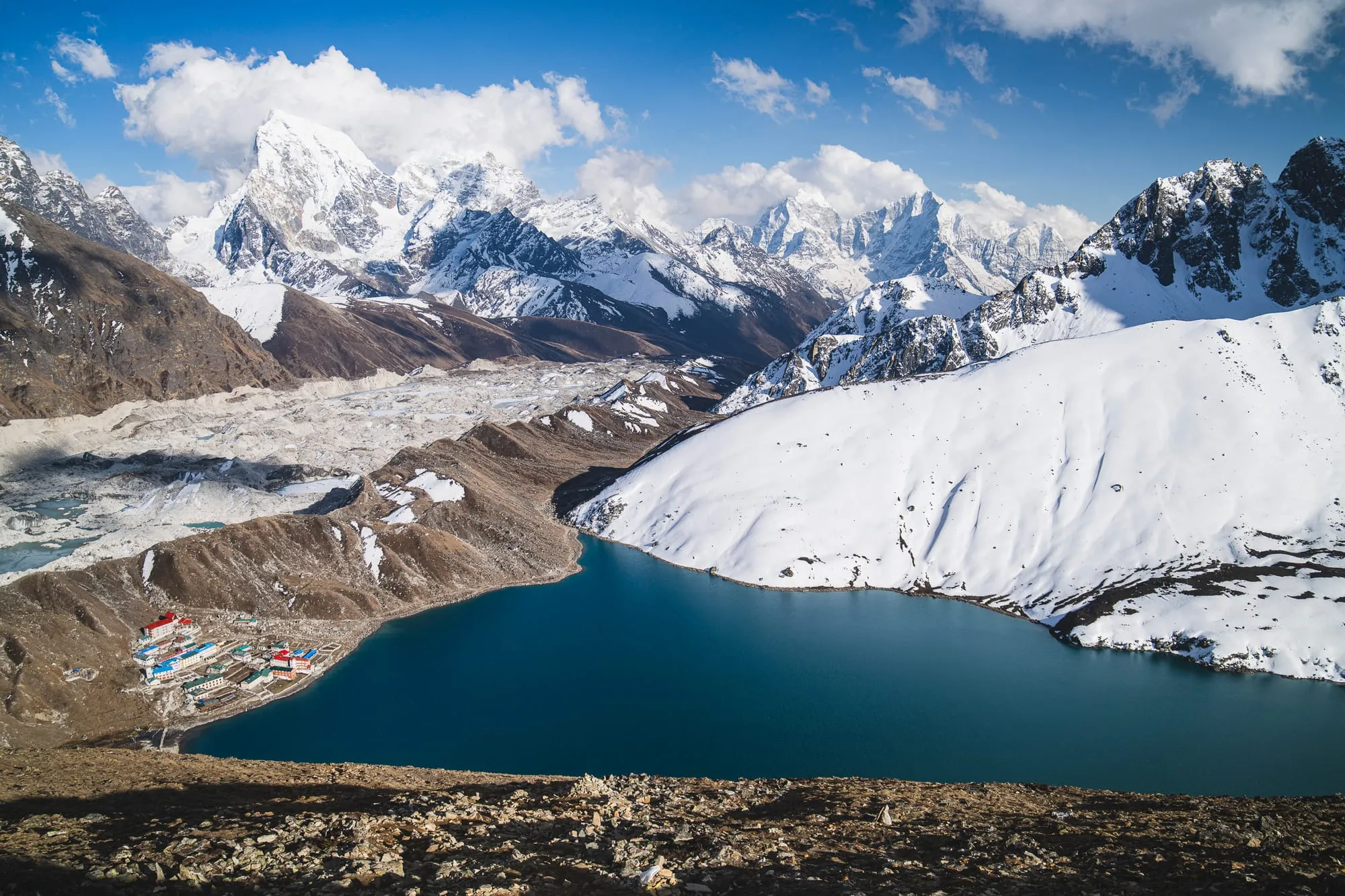
A day of beautiful scenery. The trail passes the first Gokyo lakes and reaches the village, on the shore of the third lake. In the afternoon we walk to the fifth lake, which has a very good view of Everest. Beside the lakes flows the Ngozumpa, the longest glacier in Nepal, about 36 km long. From here you also see the south face of Cho Oyu (8,188 m), another peak of over eight thousand metres.
- Distance
- 7 km
- Ascent
- +400 m
- Descent
- −60 m
- Time
- 4-5 hours
- Stay
- teahouse in Gokyo
- Meals
- full board
21AprWednesdayDay 10 of 20Wednesday · Gokyo RiFour eight-thousanders from one spotGokyo → Gokyo Ri, 5,357 m → Gokyo → Thaknak, 4,700 m
Straight after breakfast we climb Gokyo Ri. The climb is not difficult, but it is superb: from the top you see the lakes and four peaks of over 8,000 m, Cho Oyu, Everest, Lhotse and Makalu. On top of the day's stage, Gokyo Ri means about 600 m of ascent and as much descent.
After coming down we carry on to Thaknak and cross the Ngozumpa glacier. The scenery on the moraine is spectacular, and from Gokyo Ri you see all of it before you set foot on it.
- Distance
- 6 km
- Ascent
- +330 m
- Descent
- −400 m
- Time
- 5-6 hours
- Stay
- teahouse in Thaknak
- Meals
- full board
22AprThursdayDay 11 of 20Thursday · Cho La passCrossing the Cho La pass, 5,420 mThaknak → Cho La pass, 5,420 m → Dzongla, 4,820 m
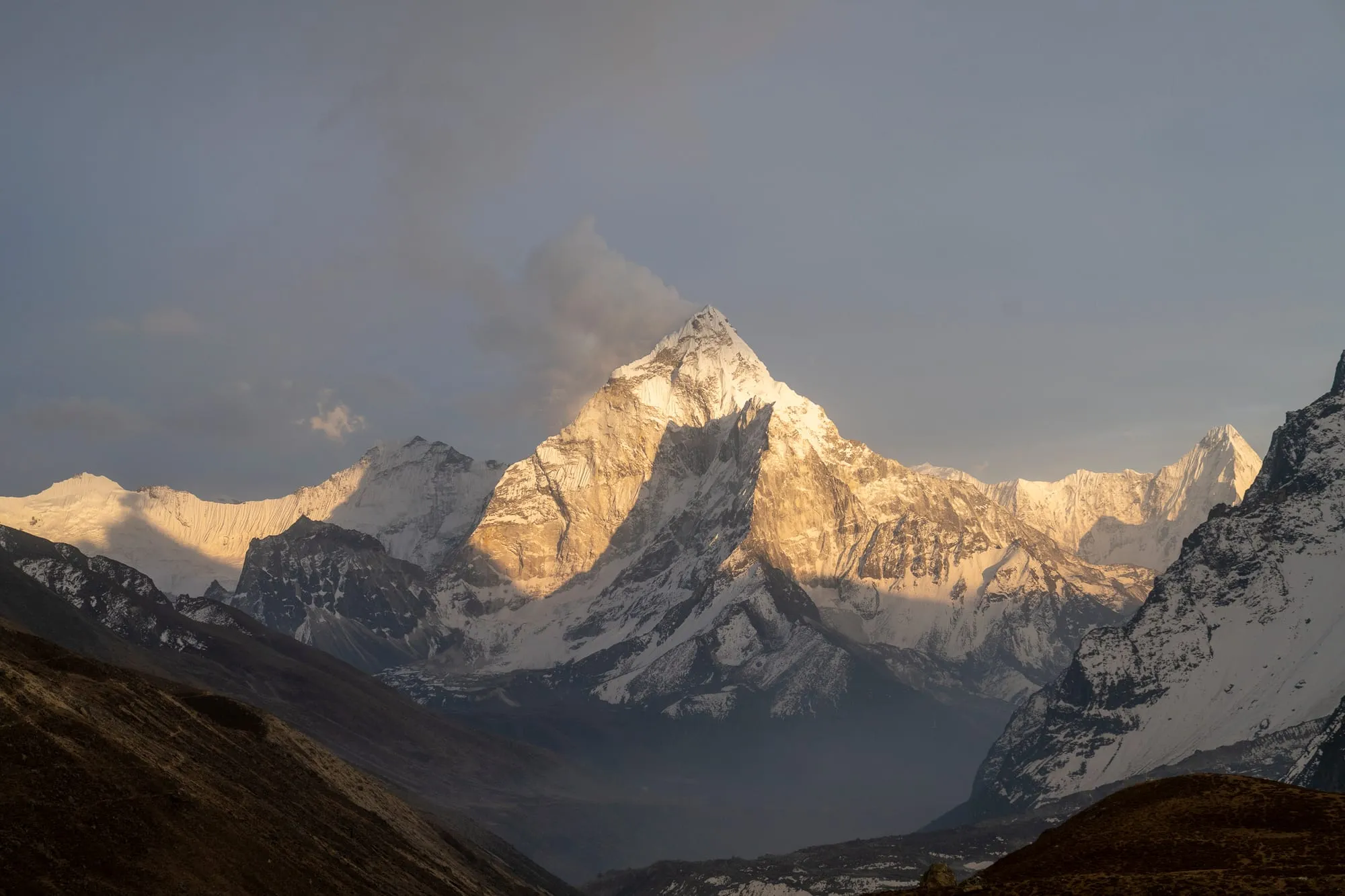
The crossing is long and hard. We leave at first light, because it takes at least 8 hours, and climb slowly, to give the body time to adjust. On our right is Cholatse (6,440 m). From the pass the whole Khumbu valley opens up, with Ama Dablam, impossible to mistake. On the other side we make a short crossing of the Cho La glacier, where you see turquoise ice. In spring the glacier and the shaded sections can be frozen, which is why microspikes are on the gear list.
- Distance
- 9 km
- Ascent
- +790 m
- Descent
- −630 m
- Time
- 9-10 hours
- Stay
- teahouse in Dzongla
- Meals
- full board
23AprFridayDay 12 of 20Friday · Khumbu valleyBack on the classic routeDzongla → Lobuche, 4,940 m
We carry on towards base camp and reach Lobuche. The path from Dzongla joins the main trail near the Thukla pass, where we can take a short detour to the memorials raised to the climbers and Sherpa guides who lost their lives on the surrounding mountains.
- Distance
- 7 km
- Ascent
- +260 m
- Descent
- −170 m
- Time
- 3-4 hours
- Stay
- teahouse in Lobuche
- Meals
- full board
24AprSaturdayDay 13 of 20Saturday · Khumbu valleyGorak Shep, the last villageLobuche → Gorak Shep, 5,170 m
We set off for Gorak Shep, the last village in the valley. The trail passes what is left of the retreating Khumbu glacier, along a glacial valley covered in scree with ice still underneath. We stay here two nights: Gorak Shep is the base for Kala Patthar and for base camp.
- Distance
- 5 km
- Ascent
- +290 m
- Descent
- −60 m
- Time
- 3-4 hours
- Stay
- teahouse in Gorak Shep
- Meals
- full board
25AprSundayDay 14 of 20Sunday · Base campKala Patthar and base campGorak Shep → Kala Patthar, 5,645 m → Gorak Shep → Everest Base Camp, 5,364 m → Gorak Shep
We climb Kala Patthar at sunrise, before breakfast. This is where Everest is seen best and where its classic photo is taken, not from base camp. We go back down to Gorak Shep for breakfast.
Then we walk along the moraine of the Khumbu glacier to base camp, about 3.5 km each way, with a stop for photos and videos at the rock that marks its entrance. The tents in the camp belong to the expeditions, which in spring are getting ready to climb through the Khumbu Icefall, the most technical part of the route to the summit. We return the same way to Gorak Shep, for a second night there. It is the longest day after the Cho La pass.
- Distance
- approx. 10.5 km
- Ascent
- +750 m
- Descent
- −750 m
- Time
- 7-8 hours
- Stay
- teahouse in Gorak Shep
- Meals
- full board
26AprMondayDay 15 of 20Monday · DescentThe first day backGorak Shep → Pheriche, 4,250 m
After breakfast we leave Gorak Shep for Pheriche, a village on the classic route. We descend almost 1,000 m in a single day.
- Distance
- approx. 13 km
- Ascent
- +100 m
- Descent
- −1,020 m
- Time
- 4-5 hours
- Stay
- teahouse in Pheriche
- Meals
- full board
27AprTuesdayDay 16 of 20Tuesday · Descent“Nepali flat”Pheriche → Namche, 3,440 m
Even though we are going down almost all day, in the Himalayas the trail climbs and drops without a break. The locals call it “Nepali flat”, which really means a long string of ups and downs.
- Distance
- 21 km
- Ascent
- +860 m
- Descent
- −1,700 m
- Time
- 8-9 hours
- Stay
- teahouse in Namche
- Meals
- full board
28AprWednesdayDay 17 of 20Wednesday · DescentThe last day on the trailNamche → Lukla, 2,860 m
We are back in the forest, close to the river. The hot shower in Lukla is very tempting, but it often disappoints: the showers are solar, and in cloudy weather the hot shower has to wait until Kathmandu.
- Distance
- 18 km
- Ascent
- +850 m
- Descent
- −1,450 m
- Time
- 7-8 hours
- Stay
- teahouse in Lukla
- Meals
- full board
29AprThursdayDay 18 of 20Thursday · Back in townThe flight backLukla → Ramechhap → Kathmandu
The return flight is often bumpier than the one out. From Ramechhap we drive on to Kathmandu. After two weeks in the mountains, a shower, a massage and a good meal are priceless. The rest of the day is free, for rest and shopping.
- Distance
- none
- Ascent
- none
- Descent
- none
- Time
- none
- Stay
- 3-star hotel in Kathmandu
- Meals
- breakfast
30AprFridayDay 19 of 20Friday · Spare dayAn extra day in KathmanduKathmandu
Flights from Lukla depend on the weather and are often delayed. This day is the buffer for such delays. If everything goes to plan, you have it free in Kathmandu.
- Distance
- none
- Ascent
- none
- Descent
- none
- Time
- none
- Stay
- 3-star hotel in Kathmandu
- Meals
- breakfast
1MaySaturdayDay 20 of 20Saturday · DepartureHeading homeHotel → Tribhuvan International Airport (KTM)
Transfer to the airport, depending on your flight time.
- Distance
- none
- Ascent
- none
- Descent
- none
- Time
- none
- Stay
- none
- Meals
- breakfast
Times are approximate. The pace and the stages may be adjusted by the guide, depending on the weather and how the group is doing.
The programme may change if anything unforeseen happens. In such cases the guide makes the best decision to keep the tour as close as possible to the original plan. For example, if it is better to leave for Ramechhap as early as day 2, to be closer to the airport and gain time for the first day of the trek, we do it.
What altitude means
Move the slider to see how much air and oxygen you have at each stop, compared with sea level.
- Air pressure
- 495 hPa
- Oxygen compared with sea level
- 48.9 %
- Water boils at
- 81.2 °C
Approximate values, calculated with the standard atmosphere; real conditions vary with the weather and the latitude. How you adapt: altitude sickness.
On the trail to Everest
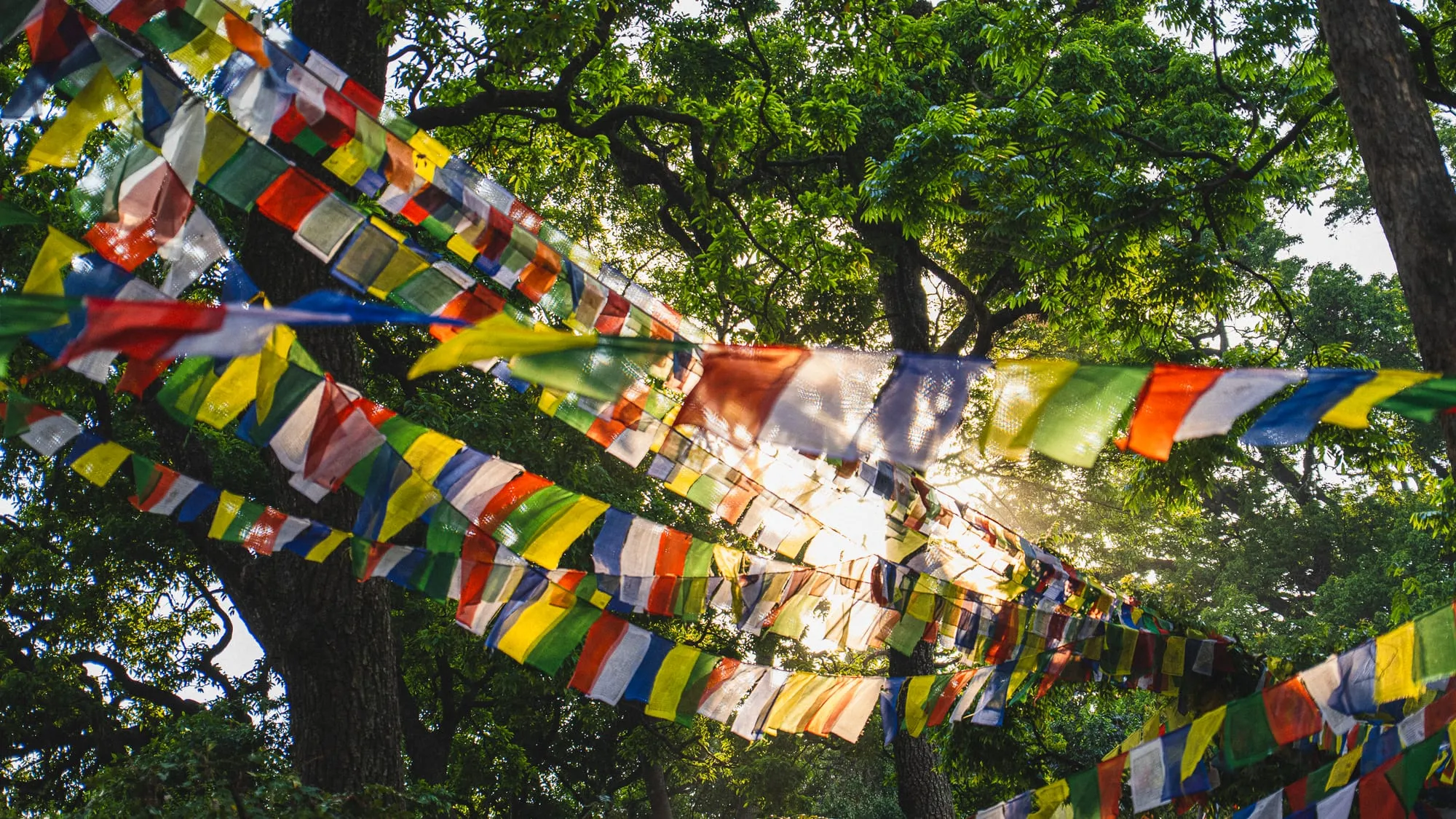
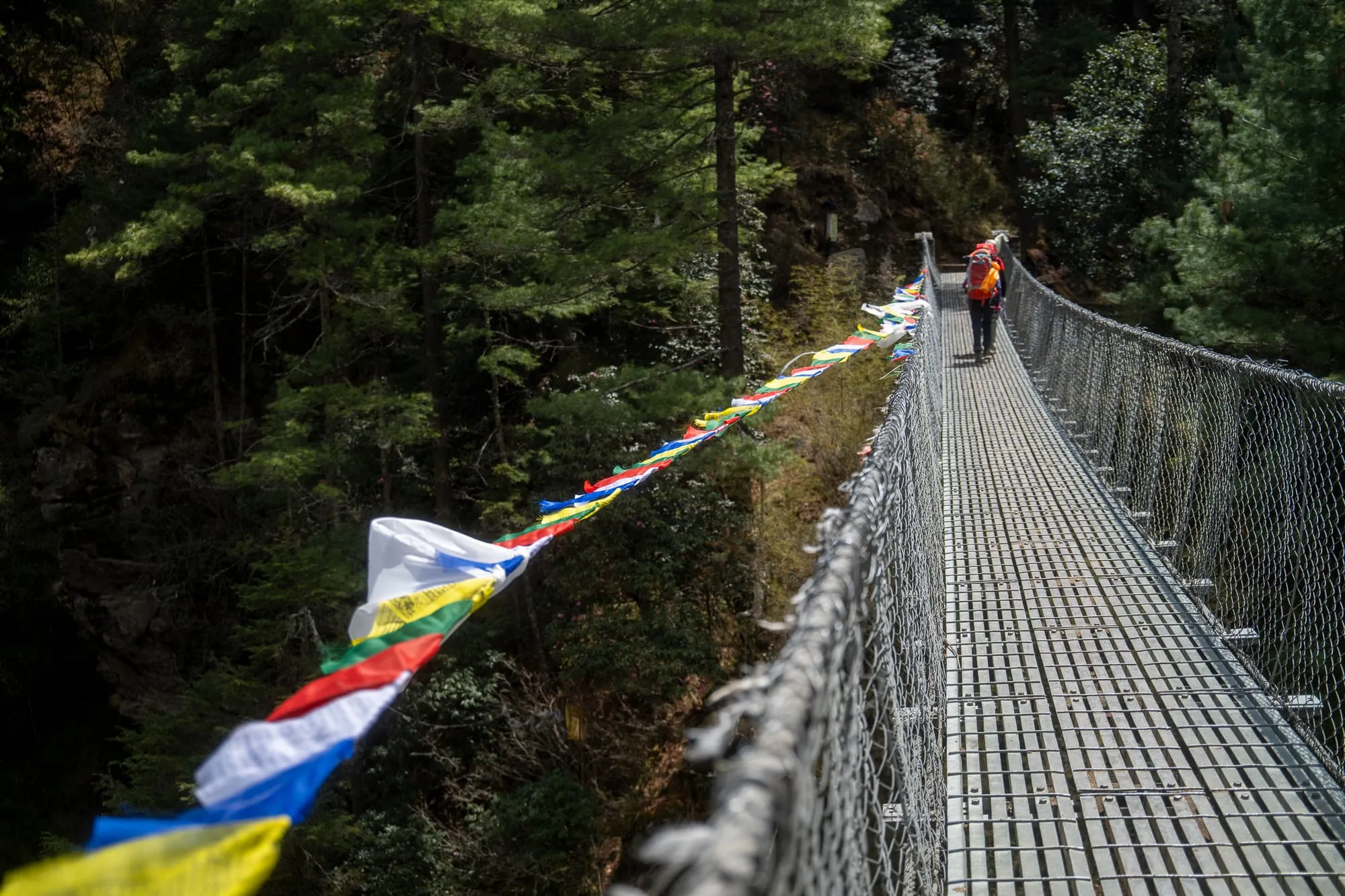
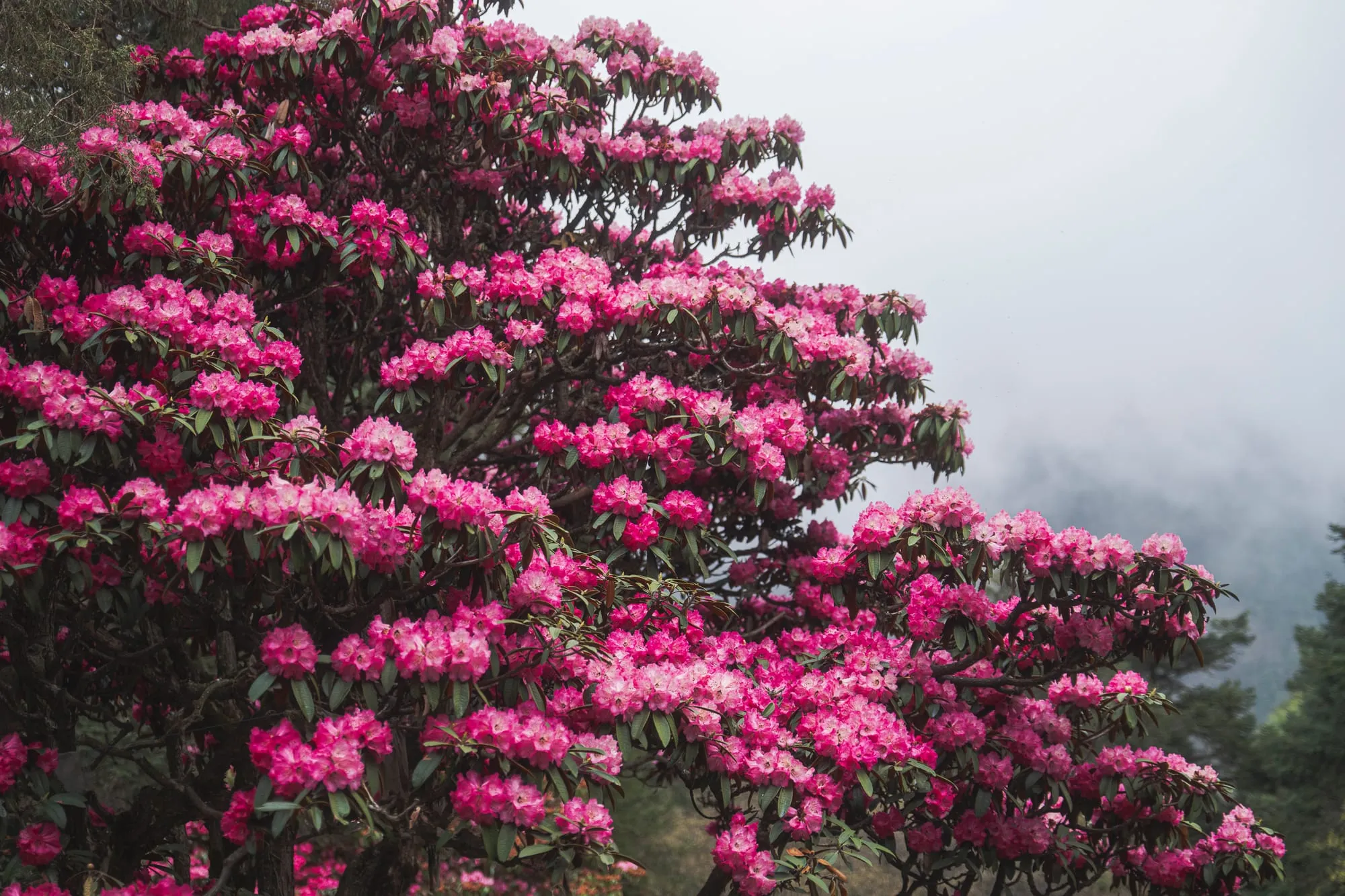
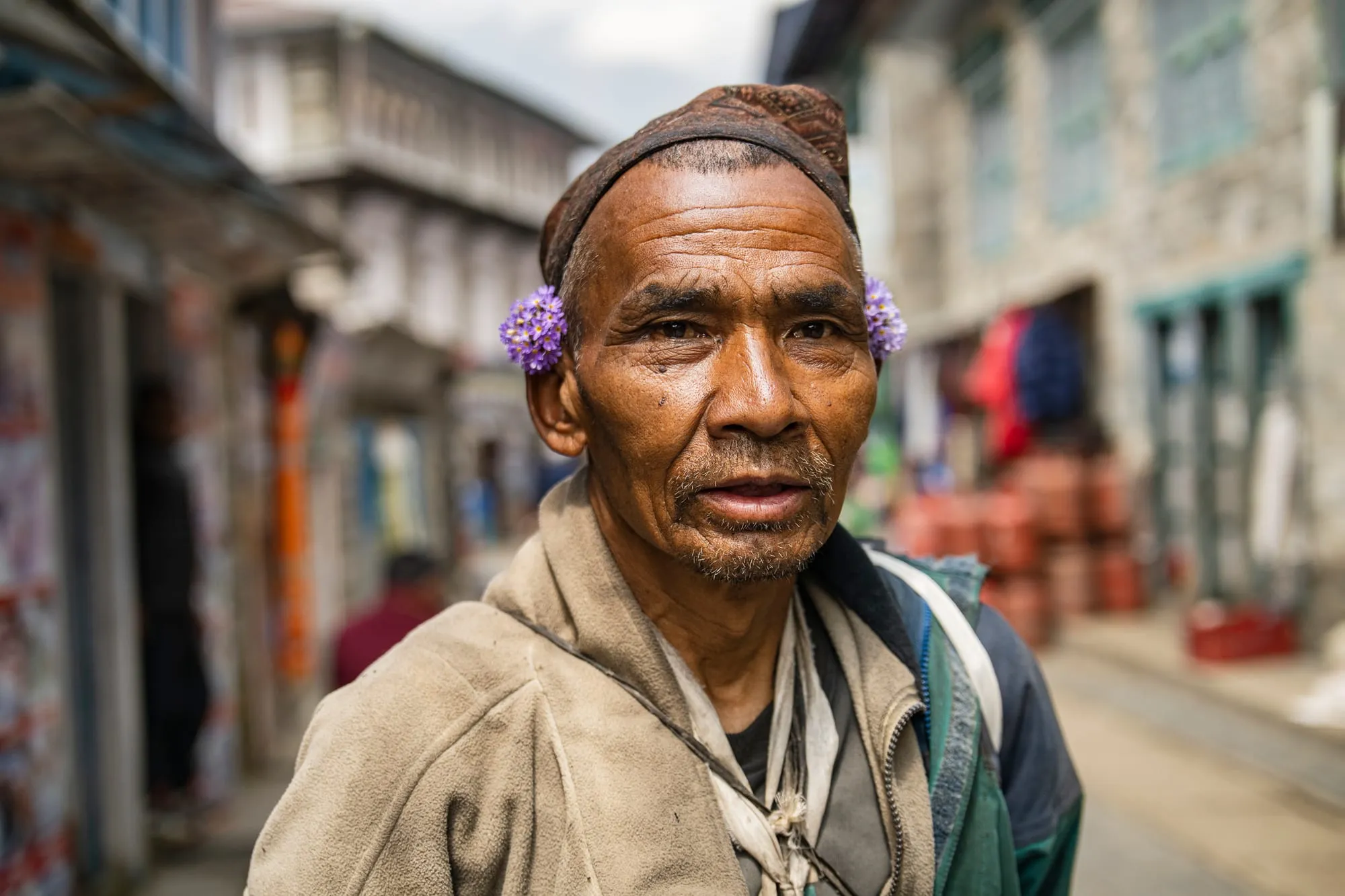
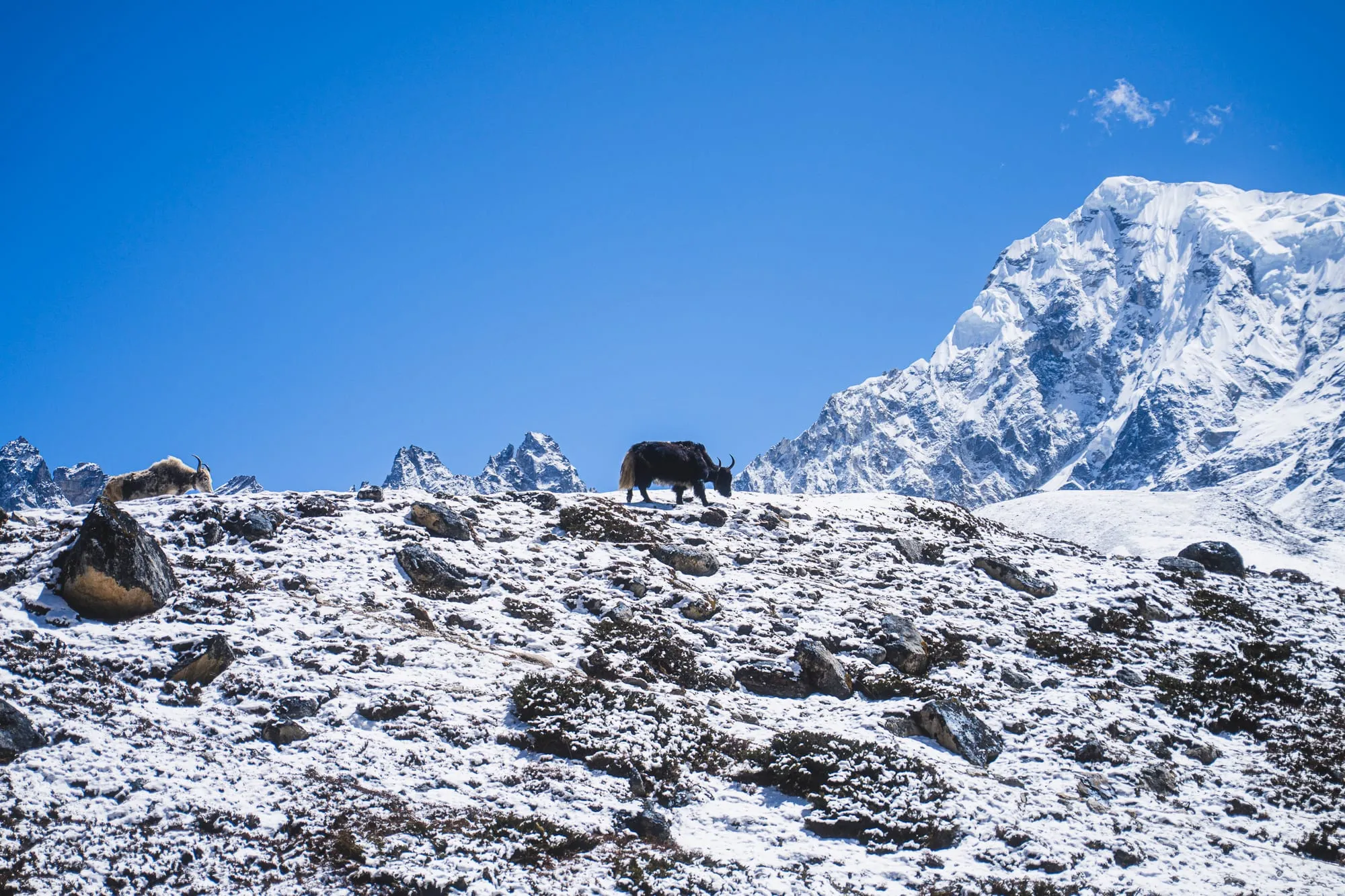
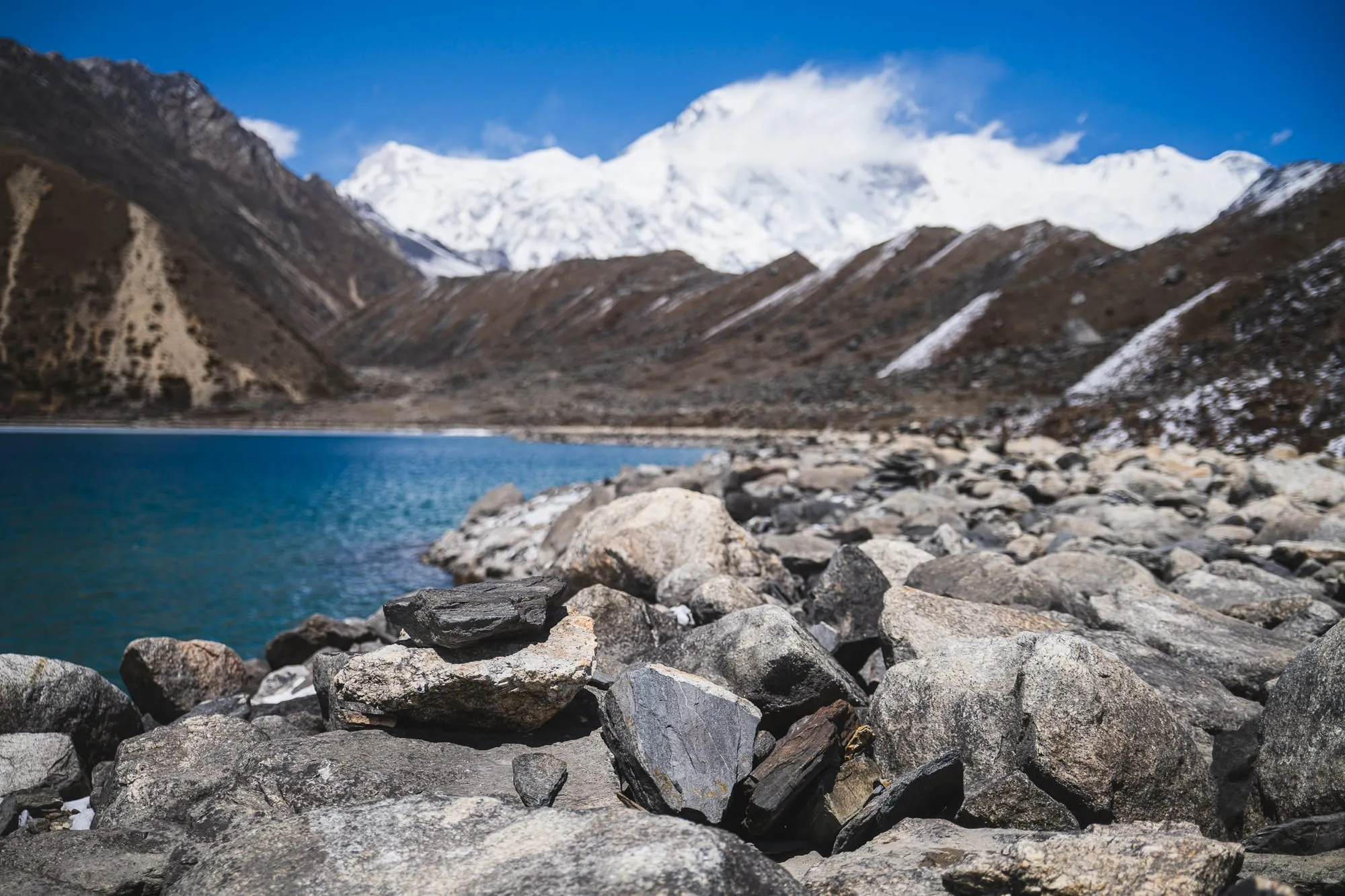
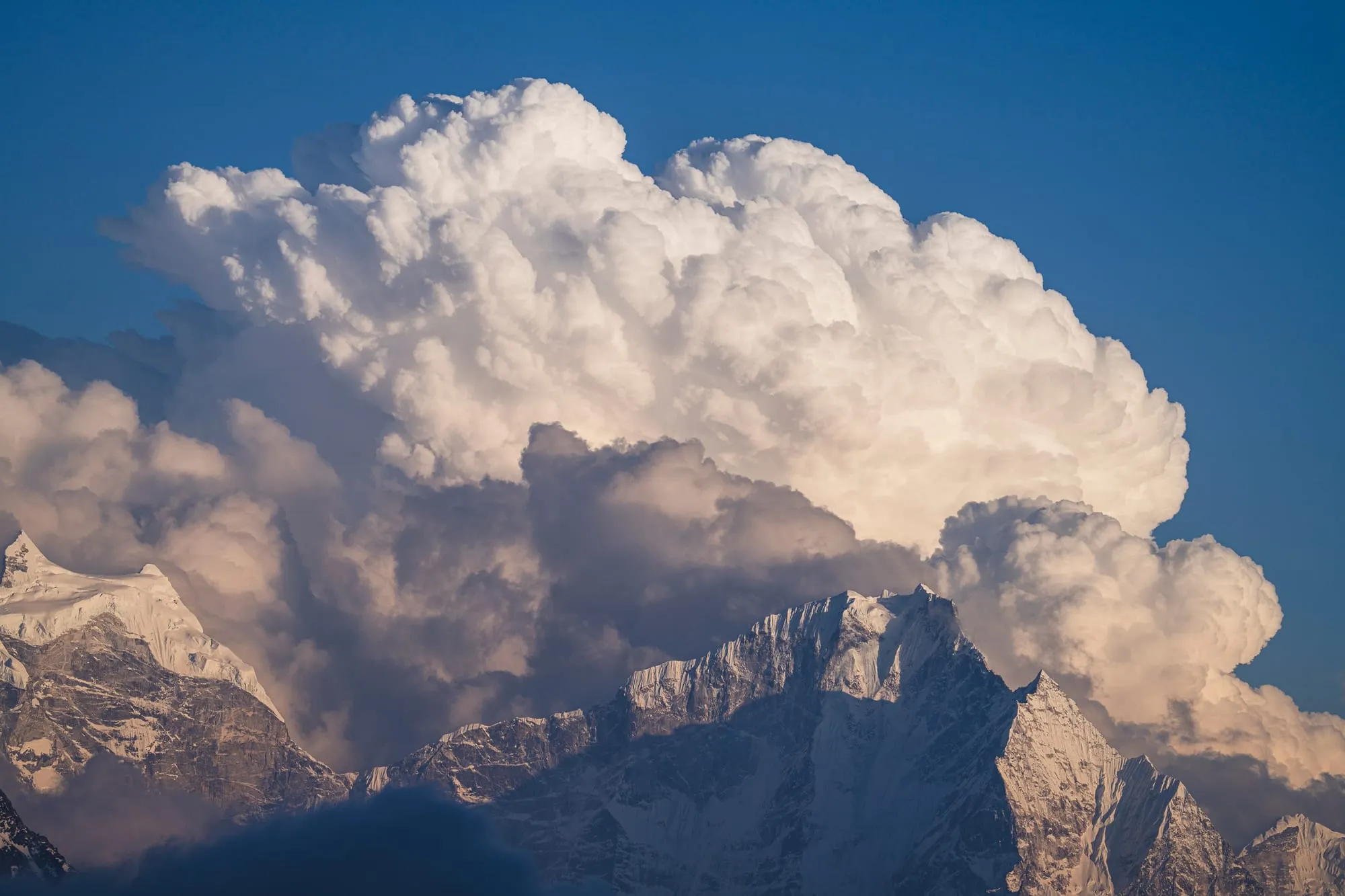
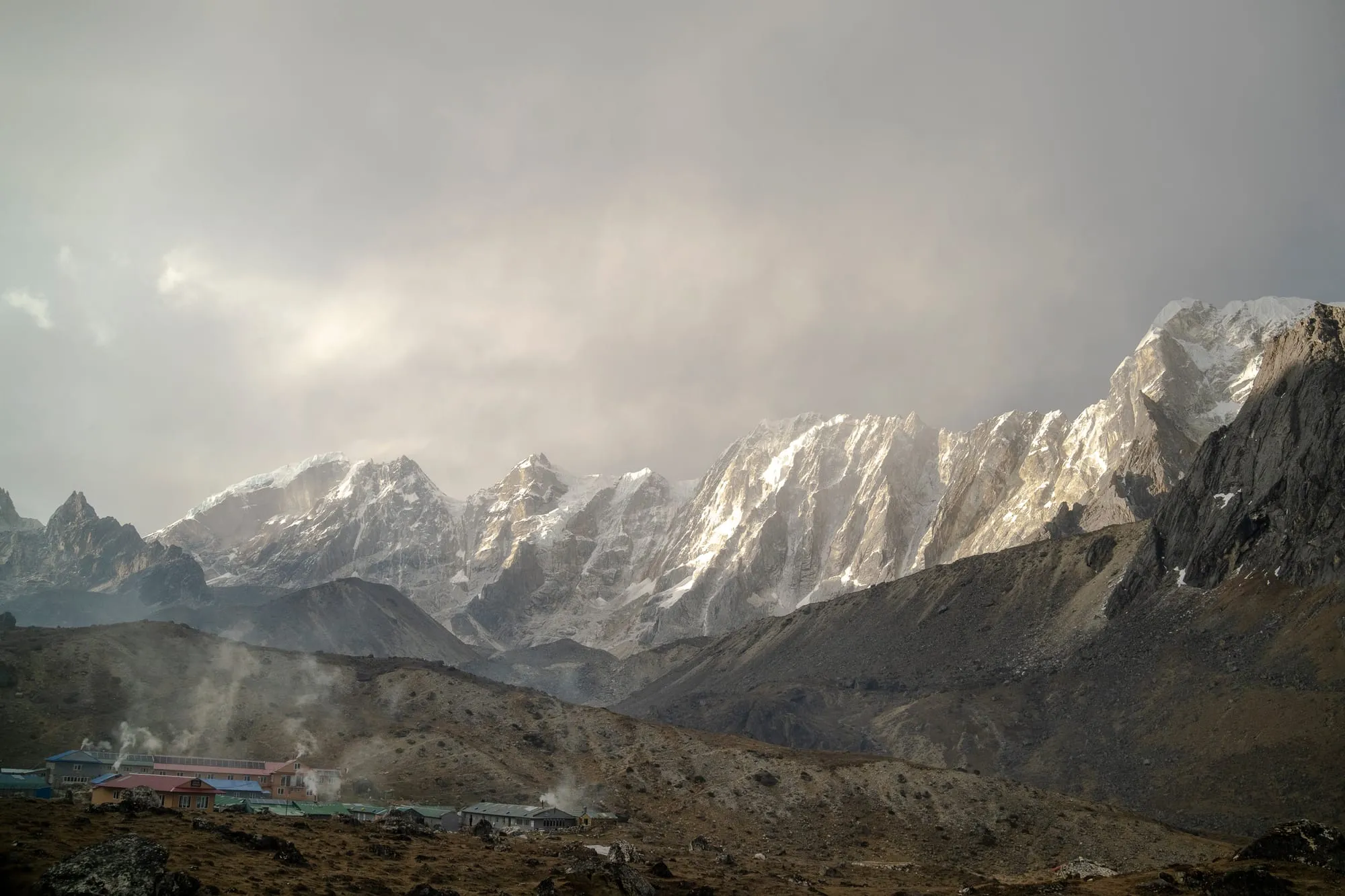
Where you sleep
On the trek you sleep in teahouses, the guesthouses along the trail, in a double room. The facilities are simple but enough, and meals are taken in the common room, usually around the stove. Hot water, battery charging and wifi are paid for separately, at each teahouse.
3-star hotel
Double room, with breakfast. Two nights at the start, on 12 and 13 April, and two at the end, on 29 and 30 April.
Teahouses
From Phakding to Lukla, with full board: at every meal, a main dish and, as you prefer, coffee or tea.
The last village in the valley
The base for Kala Patthar and for base camp, on the nights of 24 and 25 April. It is the highest altitude you sleep at on the trek.
Car and domestic flight
Domestic transfers by car and the Ramechhap-Lukla flight, both ways. On the flight the limit is 15 kg per person, including hand luggage.
The crew and safety
For the whole trek you are with an English-speaking local guide. The bags are carried by porters, one for every two people, with up to 12 kg per person. If you have more gear, an extra porter can be hired. The guide carries a first-aid kit, and the insurance, accommodation and meals of the guide and porters are included in the price. I am with the group from arrival to Everest Base Camp; if the group includes participants going on to Island Peak, I carry on with them from there, and you walk down to Lukla with the local guide.
Along the trail there are two Himalayan Rescue Association medical posts that run during the trekking season: one at Pheriche and the Everest ER clinic at base camp, open every spring.
What it costs, what is included and how you pay
The full programme, 12 April-1 May 2027: 20 days, 15 of them on the trek.
Included in the price
- Planning, support and guidance from Sorin Chineață before departure and throughout the expedition
- 4 nights in a 3-star hotel in Kathmandu, in a double room, with breakfast, and the traditional welcome dinner
- Domestic transfers and the Ramechhap-Lukla flight, both ways
- 15 nights in teahouses, in a double room, with full board for the whole trek
- National park permits and local access fees
- An English-speaking local guide and one porter for every two people, with up to 12 kg per person
- Insurance, accommodation and meals for the guide and porters
- A first-aid kit
Not included
- The Bucharest-Kathmandu-Bucharest flight
- Tourist visa, paid on arrival: USD 50 for 30 days
- Lunches and dinners in Kathmandu, apart from the welcome dinner
- Personal mountain gear
- Hot water, battery charging, wifi and snacks on the trek
- Single room supplement at the hotel: USD 100
- Any other product or service not listed under “Included in the price”
€150 per person, the recommended amount for the guide and porters. Not included in the price; given at the end.
How payment and the group discount work
The balance can be paid in full or in instalments agreed together, by the date in the card.
The discount applies if, 60 days before departure, the group has reached the threshold in the card, with every participant's deposit paid. It comes off the last payment or instalment, and if you have already paid in full, we refund it by bank transfer within 14 days.
What is holding you back?
The price. You do not pay it all at once: first the deposit, then the balance, in full or in instalments we agree on (the amounts and dates are in the card). If the group reaches 10 participants, you also get the group discount.
See what the price includesThe effort. The programme has acclimatisation days and a pace meant for ordinary people, not athletes. I will tell you honestly whether the tour suits you and how to prepare.
How fit you need to beThe dates. If the 2027 dates do not suit you, write to me: you will be the first to hear when I set the next departures.
Write to meSomething else. Ask me directly: I reply personally, on WhatsApp or in a short call.
12 Apr-1 May 2027
11 places left of 14
Places updated on 27 October 2026
€100 off per person when we are 10 with the deposit paid. Now: 3 of 10.
€2,400
for one person
- €600 depositwhen the place is confirmed
- €1,800 balanceby 1 February 2027
- Departure12 April 2027, from Bucharest
A request commits you to nothing. I reply personally; then we sign the contract and you pay the deposit.

Want to come along?
I am Sorin Chineață and I lead the Nomad Exped groups. Write to me with any question about the programme, gear or preparation. For other activities or dates I will put together a separate proposal, based on what you want to do and how many of you there are.
